Temperature Inactivation of Salmonella Ground Beef
Introduction
Salmonella enterica and Listeria monocytogenes are two of the most of import foodborne pathogens; they are known to occur in raw meat, and are associated with foodborne outbreaks (Rose et al., 2002; EFSA and ECDC, 2015). Consuming contaminated raw or undercooked meat is believed to be i of the of import vehicles of foodborne infection. The presence of these pathogens in meat can present a serious food safe threat. According to the strong-bear witness foodborne outbreaks in Europe, up to 38.five% cases happened at households/domestic kitchens (EFSA and ECDC, 2015). Acceptable refrigeration and thorough cooking are 2 points of attention to ensure microbiological safety of meat toward the end of the food chain.
Footing meat is a potentially chancy type of fresh meat, it is particularly susceptible to bacterial contamination throughout its mass, and therefore, more than probable to incorporate foodborne pathogens (Lianou and Koutsoumanis, 2009; Schlisselberg et al., 2013). Both retailers and consumers use low storage temperatures to minimize growth of spoilage and pathogenic microorganisms. However, 50. monocytogenes can survive or even grow at low temperatures; Due south. enterica can grow when the storage temperatures are driveling. Predictive models can be used to judge the growth potential of microorganisms in the nutrient concatenation. A number of models and software have been adult to predict the effects of temperature, pH or h2o activity on the growth of pathogens in ground meat (Mbandi and Shelef, 2001; Ingham et al., 2007; Pin et al., 2011; Velugoti et al., 2011). A limitation of these models is that they are based on the collection of information in sterile basis meat. Studies take demonstrated that the effects of competing microbiota on the growth of pathogens cannot be neglected (Zaher and Fujikawa, 2011; Møller et al., 2013). Turning our attending to the growth in ground pork meat, studies concerning the effect of natural microbiota on growth of pathogens have been performed by Ingham et al. (2007) and Møller et al. (2013) where ground pork was inoculated with relatively high levels of pathogens (iii–5 log CFU/g). However, the actual initial contamination level of S. enterica and Fifty. monocytogenes in ground pork is commonly low (<10–100 CFU/m) (Ghafir et al., 2005; Thevenot et al., 2006). Studies on chicken meat and fresh cut salads have indicated that the pathogens' initial densities had effects on their growth in the presence of natural microbiota (Oscar, 2007; Manios et al., 2013), and we wait a like effect in ground pork meat. The growth of Due south. enterica and 50. monocytogenes in ground pork meat with realistic levels of natural microbiota and low levels of inoculated pathogens is, as far as the authors are aware of, not available in literature or in the Combase Browseri.
Home-cooking exercise is an important and effective style to eliminate pathogens in meat. So far, thermal treatment remains the primary method of microbial inactivation for consumers at home (Álvarez-Ordóñez et al., 2008). It is recommended that ground pork or beefiness must be cooked to an internal temperature of 71 or 70°C for ii min or its equivalent (Informational Committee on the Microbiological Condom of Food [ACMSF], 1995; FDA, 2011b). However, most of the European consumers check the meat doneness visually, rather than using a thermometer (Bearth et al., 2014). Information used to establish cooking recommendations has largely been derived from D values in laboratory experiments (International Commission on Microbiological Specifications of Foods [ICMSF], 2005). Since the late 1990s, a number of studies accept evaluated the estrus resistance of South. enterica and Fifty. monocytogenes in buffers or broth (Juneja et al., 2001; Sorqvist, 2003; Miller et al., 2009), and in meat and meat products (Juneja et al., 2001; Irish potato et al., 2006; Halder et al., 2010; Vasan et al., 2014), only data collected using actual consumer-based handling and cooking processes are comparatively deficient. Thermal inactivation studies in the laboratory are ordinarily performed at isothermal conditions, however the cooking processes consumers use at domicile are generally non-isothermal: burgers are usually thermally treated for several minutes on each side in a frying pan in hot butter before being served for consumption. Furthermore, microorganisms in ground meat are immobilized and constrained to grow every bit colonies rather than planktonically, which may also have an consequence on the observed thermal inactivation profiles. So far, no study has focused on the inactivation of foodborne pathogens, with the latter being previously allowed to grow in footing meat, providing, thus, the rationale for setting upwardly and conducting the nowadays study.
For assessing the food safety it is needed to guess the growth and survival of pathogens in meat under reasonable foreseen conditions of pathogens' contamination level too as storage conditions and subsequent thermal treatment prior to consumption. The boilerplate temperature of the refrigerator of Belgian households is 6.7°C and every bit much 10.8% (n = 3001) was fifty-fifty at temperatures larger than 10°C (De Vriese et al., 2005). Therefore, we conducted a systematic study to assess the behavior of S. enterica and Fifty. monocytogenes in footing pork meat under 10°C refrigerator storage and subsequent consumer-based pan frying with, equally usually practiced in Belgium, visual assessment of doneness. Ground pork with natural microbiota and inoculated with a depression initial density (1–10 or 10–100 CFU/k) of S. enterica and L. monocytogenes was used to mimic naturally contaminated burgers. Meanwhile, for comparativeness, the growth and inactivation of these pathogens were also evaluated in encephalon eye infusion (BHI) broth. The written report will aid to reduce the uncertainties in assessing the food safety threat of S. enterica and 50. monocytogenes in ground pork meat. Information technology will also permit to validate the applicability of the estimations derived from microbial growth and inactivation models often established in broth media and provide quantitative information on the behavior of S. enterica and L. monocytogenes in ground pork during reasonably foreseen home storage conditions and cooking practices.
Textile and Methods
Bacterial Strains and Culture Conditions
The post-obit strains of S. enterica and L. monocytogenes were used for the growth and thermal inactivation test. Of S. enterica, three food-isolated strains selected were Salmonella Derby LFMFP 872 (pork isolate), Salmonella Enteritidis LFMFP 875 (poultry isolate) and Salmonella Typhimurium LFMFP 877 (poultry isolate). Three 50. monocytogenes strains (LFMFP 392, serotype 4b, liver pate isolate; LFMFP 421, serotype 4b, clinical isolate, and LFMFP 491, serotype 1/2b, tuna isolate) were used. All stock cultures were kept at –75°C in Tryptone Soy Broth (TSB, Oxoid, Basingstoke, England), supplemented with 0.6% yeast excerpt (YE, Oxoid) and 15% glycerol (Prolabo, Heverlee, Belgium). Working stocks were stored refrigerated at 4°C on Tryptone Soy Agar (TSA, Oxoid) slants and were renewed monthly. Working cultures were activated by transferring a loopful from the slants into BHI (Oxoid) and incubated at 37°C for 18 to 24 h. The working cultures were prepared past transferring 0.1 ml of each culture into 10 ml of BHI and incubated at 37°C for 24 h. Immediately before inoculation, a cocktail containing three strains of S. enterica or L. monocytogenes was prepared individually by mixing approximately equal population of each strain and serially diluted in Peptone Physiological Salt Solution (PPS, containing 1 g/l neutralized bacteriological peptone and eight.5 m/l NaCl).
Growth Studies
Growth Studies in Broth
The growth curves of Southward. enterica and 50. monocytogenes in broth at 10°C were determined in BHI. I milliliter of each pathogen cocktail dilution was inoculated into a 250-ml blue-cap bottle containing 99 ml of BHI to yield an initial dose of 1-ten (10-7 dilution) and 10–100 (10-half dozen dilution) CFU/ml. The goop was equilibrated overnight in the refrigerator to ten°C before inoculation. The incubation period was 24 days for S. enterica and 10 days for L. monocytogenes. At regular time intervals, aliquots (1 ml) of the culture were taken and serially diluted in PPS followed by plating on duplicated plates. The S. enterica and Fifty. monocytogenes populations were determined by plating on Xylose Lysine Deoxycholate (XLD, Oxoid) and Listeria Ottaviani and Agosti (ALOA, Biolife, Milano, Italy), respectively. Bacterial colonies were enumerated later incubation of the plates at 37°C for 24 and 48 h for S. enterica and L. monocytogenes, respectively.
Growth Studies in Footing Pork Meat
Basis pork meat was purchased at a local store and analyzed for the presence of South. enterica and L. monocytogenes, and was found to be absent in 25 g of meat samples (see below). The analysis of characteristics of the meat was performed as described by Lahou et al. (2015). Information technology indicated that the ground pork contains about 8.1% fat and 1.5% sodium salt. The measured pH and water action were 5.6 and 0.98, respectively. The meat was divided into portions (9.9 1000) and aseptically transferred into a stomacher bag for growth studies. A diluted culture (0.1 ml) of the cocktail of S. enterica or 50. monocytogenes was inoculated individually. The initial pathogen density aimed for was 1–10 or ten–100 CFU/g, which is similar to the level expected in naturally contaminated meat. The negative control samples were inoculated with 0.1 ml PPS. Subsequently the inoculum was added, the bags were paw mixed for 30 due south, stomached for 2 min, compressed into a thin, compatible layer, loosely oestrus sealed, and then stored in a 10°C refrigerator. At selected times of incubation samples were added with 90 ml of PPS and were thoroughly homogenized in a stomacher (Lab Blender 400, Seward Laboratory, London, Britain). Each sample was then serially x-fold diluted with PPS for decision of bacterial density. The enumeration of the total plate count (TPC) in Plate Count Agar (PCA, Oxoid) was derived from ISO 6222 (5 days incubation at 22°C). Presumptive lactic acid bacteria (LAB) count was determined on Homo Rogosa Precipitous Agar (MRSA, Oxoid) with an overlay according to ISO 15214 (3 days incubation of MRS at 30°C) and the enumeration of coliforms was performed using Violet Blood-red Bile Lactose (VRBL, Oxoid) Agar overlaid with the same medium according to ISO 4832 (24 h incubation of VRBL at 37°C). S. enterica and L. monocytogenes was, respectively, plated on XLD and ALOA plates. Suspected S. enterica colonies were further confirmed using Crystal Due east/NF ID (BD Benelux N. V, Erembodegem, Kingdom of belgium).
Thermal Treatments
Thermal Treatment in Broth
Two methods were compared to evaluate whether different test methods used to measure out thermal inactivation would influence the results. The schematic diagram of the two methods is shown in Figure 1. In Method I (Figure 1A), a 0.i ml portion of the stationary phase civilization was added straight into nine.9 ml BHI in examination tubes (125 mm × fifteen mm), resulting in an initial population of approximately seven.0 log CFU/ml. This method is termed the reference method. Method Two is referred to equally an culling method. In method Ii ane-ml portions of culture were inoculated to 9 ml of BHI along the inner wall of the thin-walled exam tube (160 mm × 15 mm) (Figure 1B). In both methods the test tubes were submerged in a h2o bath (Memmert, WB 10, Germany) preheated to the target inactivation temperature of 60 ± 0.1°C. The temperature of the goop was monitored in a test tube throughout the duration of the thermal treatment with Testo 177-T4 temperature data logger (Testo AG, Lenzkirch, Germany). Later the treatment, all the tubes were transferred to an ice water bathroom within thirty min before plating on XLD or ALOA plates for survivors.
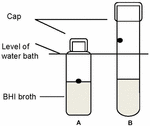
Figure one. Schematic diagram of method I (A, reference method) and method II (B, alternative method) used to appraise the heat resistance of pathogen strains in the water bath. The dots are the spots where cultures were injected.
Rut resistance of all the bacterial strains was compared in standard BHI broth (pH 7.3, 0.5% NaCl) and in BHI adjusted to pH 5.half-dozen with lactic acid and NaCl 1.5% (w/w) as the intrinsic weather in the ground pork meat. The added book of lactic acid did not significantly affect the book of the media. The stationary phase cultures of each tested strain were separately diluted with the claiming media (standard or adapted BHI) to around 6 log CFU/ml. For the heat resistance test, 1-ml portions of the diluted culture were thermal treated equally described in method II previously.
Thermal Treatment in Pork Meat Burgers upon Simulated Dwelling Pan-frying
Ane milliliter strain mixture dilution of South. enterica or 50. monocytogenes was individually inoculated into 99 g portions of ground pork in a stomacher bag for an initial dose of 10–100 CFU/one thousand. The stomacher bags were massaged as described previously. Burgers (viii.5 cm past ane.5 cm) were prepared in sterile Petri dish. Individual burgers were placed in stomacher bags, heat sealed, stored at ten°C for 5 days, and subjected to microbial analysis and faux home pan-frying.
The inoculated pork burgers were baked in a frying pan of TEFAL S.A.Due south ® with a bore of 24 cm on an electrical heating plate (SCHOTT ® instruments, model: SLK2, 1800 W, heated zone diameter of twenty cm). The standardized cooking procedure and time was established based on preliminary tests as to obtain a visual well-done cooked pork burger (Lahou et al., 2015). The pan was preheated at heating state 7 (the highest heating state of the heating element was 9). So a total of 10 g of butter (Belolive ® ) was melted for another two minutes at state vii until skim disappeared. One burger per experiment was put in the pan and fried at heating land 5 for iv.5 min for each side (total cooking fourth dimension ix min). The fried burger was lifted out of the pan and cooled downwards for 10 min on a plate followed by determination of the weight. During the procedure of pan-frying, geometric middle and surface temperatures (both top and bottom surface) of three additional burgers were monitored and recorded with a data logger (Testo 177-T4). The thermocouples were bent and inserted at ca. 3 mm depth in the burger so that they could measure out temperature in a relatively minor top/bottom surface layer of the burger. This temperature is henceforward called burger surface temperature. As a side-remark, it should exist noted that the surface of a pork meat burger is not a flat and shine surface and temperature of the (sub) surface of the burger may be very location specific. As before long equally the burger was turned, the probes were immediately put back in. To measure the cadre temperature, a wireless temperature logger (DS1922T iButton, Maxim Integrated Products, Sunnyvale, CA, USA) was placed into the center of the burger. The burger cadre temperature profile was used to calculated the procedure lethality (F-value) using an Excel spreadsheet2 based on the formula below
where T is the core temperature (°C) at a time t (min) and T ref is a reference temperature (60°C was used in this study). Co-ordinate to a previous study (Murphy et al., 2006), in ground pork the z value is v.89°C for Salmonella and v.92°C for L. monocytogenes.
A representative x g sample, a strip of ca. 1 cm wide from the middle of the fried burger, was taken for microbial analysis. Enumeration of S. enterica or 50. monocytogenes, TPC, total coliforms and LAB was performed as described above. For the samples where no surviving South. enterica or L. monocytogenes were found by enumeration, duplicate 25 g samples were used to test a consummate inactivation of pathogens by the enrichment method. The enrichment of S. enterica and Fifty. monocytogenes was carried out as previously described by Siro et al. (2006). For S. enterica, a 25 thousand sample was blended with 225 ml of Buffered Peptone Water (BPW, Oxoid) and incubated at 37°C for 24 h. From the master enrichment, 0.1 ml of the aliquot was transferred into 10 ml of Rappaport-Vassiliadis goop (RVS, Oxoid) and incubated at 42°C for a farther 24 h earlier plating out on XLD plates. For 50. monocytogenes, the primary enrichment was washed in Demi-fraser enrichment goop (Oxiod) at xxx°C for 24 h. Then a 0.1-ml of the primary enrichment goop was subcultured into the secondary enrichment broth (10 ml of Fraser) and incubated at 37°C for 24 h. Afterward samples were streaked onto ALOA plates.
Information Analysis
Growth and inactivation studies for both pathogens were performed in triplicates. The mean of the duplicated plate counts per repetition was adamant and converted to log10 values, and plotted versus fourth dimension. Growth curves were fitted with "DMFit online3" using the Baranyi and Roberts (1994). Prison cell counts below the detection limit of 5 CFU/g were excluded in the adding of curves, only indicated as separate information points on 10-axis in the aforementioned figure. The growth parameters including lag time (λ), maximum growth rate (μmax), and maximum population density (y max) were determined. Inactivation data were analyzed past linear and non-linear models by the software GInaFiT (version i.six) (Geeraerd et al., 2005). The goodness of fit of the models was assessed using adjusted regression coefficient (). The kinetic parameters from the all-time fit model were reported. Statistical interpretation of differences among parameters was determined using ANOVA analysis (SPSS statistical software, Inc., Chicago), using 95% conviction limits.
Results
Growth of Due south. enterica and L. monocytogenes in Broth
Growth curves of a cocktail of three strains of S. enterica or L. monocytogenes in broth exhibited a classical sigmoidal behavior (not shown). Variation amidst replications was found to be non significant (P > 0.05), and thus the growth data were averaged. At both initial densities, the maximum growth rate of S. enterica and Fifty. monocytogenes was estimated to be nigh 0.021 and 0.066 log10 CFU/ml/h, respectively. Due to the longer lag time (ca. sixty vs. 17 h) and lower growth rate, the time needed to reach stationary stage for South. enterica was more than double that of L. monocytogenes.
Growth of S. enterica and Fifty. monocytogenes in Ground Pork with a Natural Microbiota
The initial concentration of TPC, LAB, and coliforms in the ground pork were ca. 4.half dozen, four.4, and 1.5 log CFU/g, respectively, which indicated satisfactory initial microbial quality of the ground pork meat. Growth curves of TPC, coliforms, and LAB with different inoculum levels of Due south. enterica or Fifty. monocytogenes at 10°C are presented in Figure ii. Afterwards ca. 4 to v days all the indigenous leaner reached the stationary stage of growth. TPC reached its maximum value of ca. 8.9 log CFU/grand, LAB at viii.3, whereas v.9 log CFU/one thousand for coliforms. The maximum growth rates of the indigenous bacteria were similar to each other (P > 0.05) regardless of their initial levels or inoculated pathogens (Tables 1 and two).
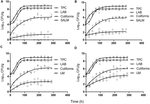
FIGURE 2. Growth of indigenous microbiota and Southward. enterica (SALM) (A,B) or L. monocytogenes (LM) (C,D) at low initial densities (A,C ∼ane CFU/g; B,D ∼10 CFU/chiliad) at x°C in ground pork meat. Solid lines are regression lines fitted with Baranyi and Roberts (1994) model.

Table 1. Growth parameters of indigenous microbiota (TPC, total plate count; LAB, lactic acid leaner) and Due south. enterica (SALM) in basis pork meat at 10°C determined by Baranyi and Roberts (1994) model.

TABLE 2. Growth parameters of ethnic microbiota (TPC, LAB) and L. monocytogenes (LM) in ground pork meat at ten°C determined by Baranyi and Roberts (1994) model.
Salmonella enterica cells were able to multiply at both inoculum levels. However, the population increased by less than one log unit only, even after enforced long fourth dimension (12 days) storage at this abusive temperature of 10°C. Increase of S. enterica starting from ca. 20 CFU/grand occurred with limited variation (SD < 0.5 log CFU/g, Figure 2B) compared with the samples starting from a few (ca. ii) CFU/g which ranged from <0.seven (detection limit) to 2.ane log CFU/g (Figure 2A). Under the aforementioned enforced abusive storage conditions 50. monocytogenes grew exponentially (Figures 2C,D) up to a maximum value of two.6 and 4.2 log CFU/grand, respectively (Table 2) after 12 days at 10°C. The increment of Fifty. monocytogenes starting from ca. 2 and 27 CFU/g was 2.3 and two.eight log units, respectively. The variation of the observed values of L. monocytogenes amid replicates was lower than for Due south. enterica.
Thermal Inactivation of S. enterica and 50. monocytogenes in Goop
Survival curves of Due south. enterica and Fifty. monocytogenes strains obtained by the reference method are shown in Figures 3A,B. The Due south. enterica curves were fitted by the log-linear model. For all regressions, the values were larger than 0.95 (data non shown). Decimal reduction time or D values were determined from the maximum inactivation rate (k max, D value = ln(10)/yard max). D values of Southward. enterica strains ranged from 0.20 to 0.24 min (Table 3). Shoulders were observed on all inactivation curves of Fifty. monocytogenes and were fitted to a log linear model with a shoulder (Geeraerd et al., 2000). The fittings yielded values from 0.97 to 0.99. The shoulder length (South l) ranged from 0.52 to 1.13 min. D values of Fifty. monocytogenes were more than than twice higher than those of S. enterica. In general a minimum process of 6D reductions in the numbers of target microorganisms is recommended for pasteurized foods (International Commission on Microbiological Specifications of Foods [ICMSF], 2005; FDA, 2011a). The t 6D values, expressing the fourth dimension needed to obtain six decimal reductions (Buchanan et al., 1993) of Southward. enterica and L. monocytogenes are given in Table three. Since shoulders were observed on L. monocytogenes inactivation curves, t 6D of L. monocytogenes strains are larger than six times the D values.
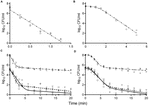
Effigy 3. Inactivation curves of Southward. enterica LFMFP 872 (A,C) and L. monocytogenes LFMFP 392 (B,D) at 60°C with different claiming methods (reference method (∘), model (-⋅⋅-); method II (Δ), model (-⋅-)) and goop (standard BHI (∇), model (- - - -); adapted BHI (□), model (—)).
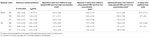
Tabular array three. Affect of heating procedure and challenge broth on the thermal resistance ( D values ± SD ) of SALM and LM heated at 60°C.
The inactivation curves obtained by the method Ii of thermal treatment (inoculated via the inner wall in the tube instead of immediately in the intermission) showed a biphasic shape. Typical curves are shown in Figures 3C,D. Survivor curves showed initially 2 to iii log reductions, followed past prolonged tailing in which the numbers simply slightly decreased further. A nothing betoken was not achieved even after xx-min thermal challenge at 60°C. It deserves attending that the apparent D values, which were calculated from the initial log-linear part of the biphasic curves obtained by method Ii, were 1.5- to two.nine-fold larger than those obtained using the reference method I (Table iii). This is important to exist noticed as the exact laboratory procedure to determine D values is not always described in detail in scientific literature and this highlights the fact that small deviations in elaborating the laboratory procedure for D values determination may impact the outcome.
When the pathogen cells were thermally treated at an initial concentration of ca. 105 CFU/ml, inactivation curves showed the same pattern as the loftier initial concentration (ca. x8 CFU/ml) (Figures 3C,D). The apparent D values were more or less invariable (Table 3). Credible D values of each strain thermally treated in standard and adapted BHI are too listed in Table 3. The strains treated in adjusted BHI (pH 5.half dozen, ane.5% NaCl) showed college credible D values than those in standard BHI, specially for S. enterica.
Inactivation of S. enterica and Fifty. monocytogenes in Pork Meat Burger by Simulated Dwelling Pan-frying
The faux dwelling pan-frying procedure used in this study resulted in thirty.4 ± 1.7% weight loss of the burgers. It was similar every bit a standard pan-frying process applied by Danowska-Oziewicz (2009) where the cooking loss was 28%. The temperature profiles of three burgers during pan-frying and cool-down at ambient temperature on the serving plate are presented in Effigy 4. The temperatures of the burgers bottom rose sharply to the maximum (93.9–100.half dozen°C) earlier flipping, while the increase on the height was very limited. The bottom temperatures were higher than the cadre temperatures, and this difference increased with time. After flipping, the (new) bottom temperature increased rapidly while the (new) tiptop temperature decreased gradually. During cooling downwardly on the serving plate the bottom temperatures of the burgers immediately started to subtract exponentially, while the core temperature yet slightly increased due to heat conduction. The peaks of the core temperatures, which ranged from 69.0 to 71.ix°C, were reached at ca. 0.iii min afterward taking the pork meat burgers out from the pan.
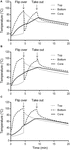
Figure iv. Temperature profiles of three replicate pork meat burgers (A,B,C) during fake domicile pan-frying.
To evaluate the efficacy of thermal treatment during this simulated habitation pan-frying on the inactivation of pathogens in the meat, F values were calculated in pork burger as the equivalent time needed to reduce S. enterica or 50. monocytogenes at threescore°C. F values were obtained according to the cadre temperature profiles of the burgers (Figure 4). The calculated F values for S. enterica were 115, 282, and 123 min for three replicates, respectively; and for L. monocytogenes 113, 276, and 121 min. All the F values were manifestly much college than the expected fourth dimension needed for 6 log reductions of both pathogens. After the pan-frying procedure pathogens are thus expected to reduce to undetectable levels as in the present study the initial contamination levels of S. enterica and L. monocytogenes in pork meat burgers (after prior storage for v days at 10°C) were ca. one.95 log CFU/1000 and 3.ten log CFU/g, respectively (Table 4). As expected no S. enterica were recovered from all the samples after enrichment in 25 g of pan-fried pork meat burger. Appropriately, at to the lowest degree a three.3-log unit reduction of Due south. enterica was obtained. However, the presence of L. monocytogenes was detected in three out of six of the 25 g pan-fried pork burger samples, so two.4- to 4.5-log units reduction was achieved in these three burgers, but no 6-log unit of measurement reduction was obtained. Equally for the ethnic microbiota the number of surviving bacteria was significantly reduced. The mean reductions of TPC and LAB were all over 6 log units. Regarding coliforms, this microbial group was, in all cases below the detection limit of 5 CFU/grand.
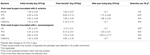
TABLE 4. Effects of pan frying on the inactivation of SALM or LM and indigenous microbiota count (TPC, LAB) in pork meat burgers.
Word
In this work, we studied the growth of South. enterica and 50. monocytogenes in artificially contaminated footing pork meat during storage nether reasonably foreseen temperature abuse at 10°C. Afterward, the inactivation of these pathogens – which were allowed to grow for 5 days at x°C in the pork burger – was adamant using a pan-frying procedure routinely practiced in Belgian domestic settings. The growth and inactivation results in the pork meat burgers were compared with those obtained in laboratory media such as BHI goop.
The survival and growth of S. enterica and L. monocytogenes in ground pork meat was monitored for up to 12 days of storage at ten°C. It is obvious that the meat was spoiled as of twenty-four hours 5: the TPC reached maximum levels. Monitoring of pathogens' behavior was continued to assess whether at that place was still outgrowth or rather survival or die-off of S. enterica and L. monocytogenes in presence of contest with these maximum levels of ethnic microbiota and their metabolites. Besides this enabled maximum comparison between behavior in the meat versus BHI goop and predictions obtained past the mathematical models. The growth parameters of S. enterica and L. monocytogenes in BHI were generally in agreement with previous selected reports from Combase database and literature when selecting experimental conditions comparable to those in the present report (civilization media of pH 7–seven.5, aw 0.99–one.00, incubated at 10°C). The Combase reported growth rates of S. enterica in goop at 10°C varied from 0.020 to 0.030 log CFU/ml/h, with an average of 0.028 (4 reported values). As for 50. monocytogenes, the growth rates ranged from 0.041 to 0.082 log CFU/ml/h with an boilerplate of 0.054 (21 reported values). In our written report, at both initial densities, the maximum growth rate and y max of S. enterica or L. monocytogenes was estimated to be similar. Thus results in the present study agreed with previous reports where the growth of pathogens in sterile goop was normally contained of initial density and y max is usually not greatly affected by growth conditions (Buchanan and Klawitter, 1991).
Equally shown, both Southward. enterica and L. monocytogenes have the power to multiply in ground pork at 10°C in the presence of a substantial numbers of indigenous microbiota. Withal, it was observed that the growth of pathogens ceased when the indigenous microbiota reached its maximum population density. This is probably due to microbial competition between pathogens and the indigenous microbiota. This phenomenon has been referred to as the "Jameson event" (Jameson, 1962). It is noted that for both Due south. enterica and L. monocytogenes in the pork meat, y max was dependent on the initial dose; y max was higher at higher initial pathogen contamination level, which is inconsistent with the results obtained in BHI broth. The departure in y max could also be attributed to the Jameson event past the indigenous microbiota in basis pork meat. A number of studies take been done on the growth of pathogens in sterilized ground meat where no contest occurred. Velugoti et al. (2011) studied the growth of Salmonella sp. in sterile ground pork meat. At ten°C, Southward. enterica reached a maximum population of 8.iii log CFU/g with a maximum rate of 0.018 log CFU/g/h, both of which were much higher than those values obtained in the present report. Mbandi and Shelef (2001) investigated the growth of S. enterica and L. monocytogenes in sterile basis beefiness at 10°C: numbers of both pathogens increased from iii.5 to approximately viii.0 log CFU/m afterwards 20 days of storage. Indigenous microbiota in raw ground meat are thought to consist of a variety of microorganisms that can inhibit the growth of pathogens. Ingham et al. (2007) studied the growth of pathogens in meat with relatively low levels of indigenous biota (≤3.5 log CFU/chiliad) and relatively high levels of inoculated pathogens (iv.6 log CFU/g). An online software for evaluating the safety of meat was adult based on their study4. This online tool predicted for Salmonella a growth of half dozen.half dozen log units in basis pork later 12-days storage at ten°C. However, we observed only less than i log unit increase of S. enterica and ca. 2.5 log units increase of L. monocytogenes. Similarly, Oscar (2007) reported that at 10°C, the growth of South. enterica from a low initial density in ground chicken with a natural microbiota was besides very express, from i.1 to 1.8 log MPN or CFU/g.
Thermal inactivation of Salmonella and L. monocytogenes has been studied extensively resulting in a wide range of D values. It is well known that the inactivation dynamics may be influenced by various factors including the bacterial strain of the species, the physiological state of microbial cells, heating and recovery conditions (Smelt and Brul, 2014). Average D values of Salmonella and 50. monocytogenes at 60°C equally reported in goop or buffers (pH vii–seven.5, aw 0.99–1.00) were listed and compared to the ones estimated in the present study (Tabular array 3). The average published D values for Salmonella and 50. monocytogenes were 0.75 and 1.32 min, respectively. Thus, the D values obtained in the BHI broth in the present study were inside the same order of magnitude.
For almost ane century, the food industry assumed that thermal inactivation followed first-order kinetics during the interpretation of the outcome of a thermal treatment on the survival of microorganisms. Notwithstanding, there is growing prove to support that the inactivation of microbial cells does not e'er follow the traditional starting time-order kinetics, especially during a mild thermal handling (Augustin et al., 1998; Valdramidis et al., 2006). In the present study, shoulders were observed on L. monocytogenes survival curves. It has been a consensus that D values should be used with care when the isothermal survival curves are not really log-linear (Peleg, 2006). Notwithstanding, in many published articles, no inactivation curves are shown, only only D values. It is non clear if the original data were indeed log-linear and so that the derived D values can have a articulate meaning. Therefore, it is recommended that the 'D values', including the ones reported in literature are critically assessed. The t xD, an alternative concept for thermal microbial inactivation, was developed to draw microbial heat resistance (Buchanan et al., 1993). Information technology describes the time t required for ten log units reductions in the microbial population. In this concept, the deviations from the first-order kinetics were taken into account when estimating the effectiveness of a thermal handling instead of excluding any shoulders and tails. Meanwhile, the utilise of t xD rather than D values when communicating the performance of nutrient inactivation processes has been accepted by many researchers (Heldman and Newsome, 2003; Valdramidis et al., 2005).
Every bit established in the present study, the oestrus resistance may exist affected past the heating method. Diverse methods of thermal treatment have been applied in evaluating heat resistance of bacteria in a laboratory media, eastward.g., heating in h2o baths using capillary tubes, examination tubes, glass ampoules completely immersed in the water, and heating using pasteurization, submerged-coil heating apparatuses etc. (Sorqvist, 2003). The test tube method is one of the commonly used due to the advantage of like shooting fish in a barrel handling. The two thermal treatment methods applied in our study produced different patterns of inactivation curves and D values. Similar observations for bacterial cells or mold spores have been reported in previous studies when the test organism was heated in incompletely submerged capped tubes (Schuman et al., 1997; Zimmermann et al., 2013). The cells coating the walls above the level of the water bath were regarded to be responsible for this tailing phenomenon; these cells were not exposed to the intended temperature of inactivation. The pathogens' strains too showed higher oestrus resistance in broth with pH adjusted to v.six and an increased (1.five%) NaCl concentration. The effect of the pH on the heat resistance was similar to that observed previously (Blackburn et al., 1997; Mañas et al., 2003; Arroyo et al., 2009). There was an optimum pH for survival of cells, increasing acerbity or alkalinity increased the rate of inactivation. It has been reported that maximum heat resistance of several pathogens is obtained at slightly acidified media (Blackburn et al., 1997). Furthermore, i.5% NaCl in adjusted BHI had a heat protective effect. Based on the above, it needs to exist recognized that the thermal inactivation kinetics of bacterial pathogens can exist affected past the examination procedures and types of challenge media. Information technology is important to use suitable methodology in assessing the thermal resistance and clearly state the test conditions.
Based on the 6D values of each three strains obtained in BHI broth in this study, ane.five and v.five min thermal treatment at 60°C are deemed to exist sufficient to achieve a 6-log unit of measurement reduction for S. enterica and L. monocytogenes, respectively. Even so, because the increased heat resistance of pathogens in a nutrient matrix versus laboratory media (Kenney and Beuchat, 2004), longer time may be needed in meat burgers to get half-dozen log units reductions for pathogens. O'Bryan et al. (2006) summarized the thermal resistance of S. enterica and L. monocytogenes in meat and poultry and neat variation was shown. At 60°C, D values of Southward. enterica varied from 3.83 to 8.v min and Fifty. monocytogenes varied from 0.31 to 16.seven min. Even when the highest D values were used for the worst-case scenario considered, the pan-frying process should exist sufficient to result in a 6 log reduction of both pathogens based on the calculated F values. Even so, the presence of L. monocytogenes in 25 g was detected in three out six of the pan-fried pork meat burgers samples. This upshot may exist explained by several facts. Firstly, the pathogens in the pork burgers in this written report were inoculated at a low level (ca. 102 CFU/g) and grew at 10°C for 5 days on the meat particles. It has already been reported that food blazon and composition (e.thousand., percent fat) may have a protective consequence on thermal inactivation. For example, Murphy et al. (2000) observed increased D values for a mixture of 6 Salmonella serotypes and Listeria innocua M1 when comparing the inactivation in chicken chest meat patties and a peptone agar aqueous solution. Secondly, the bacteria were constrained to grow every bit colonies. In Velliou et al. (2013) it was shown how E. coli K12 and Salmonella Typhimurium, grown as colonies of various sizes in a matrix gelled with xanthan gum, display a higher thermal resistance when compared with planktonic cells. The surviving 50. monocytogenes after pan-frying may be a potential take chances for food rubber. However, information technology is supposed that a concentration of L. monocytogenes non exceeding 100 CFU/k of food at the time of consumption poses limited run a risk to the consumers (Nørrung, 2000).
Based on the growth and inactivation results in basis pork meat every bit obtained in the present study, it was established that L. monocytogenes grow faster and reaches a higher population density, and there were survivors after a simulated habitation-frying process. As such, it tin can be inferred that a thermal process that ensures destruction of L. monocytogenes in ground pork volition too provide an adequate reduction of natural microbiota and other less heat resistant pathogens such as Salmonella possibly present in the pork meat burger. This coincides with previous recommendations that L. monocytogenes can be considered as the target organism for thermal inactivation (Rocourt et al., 2000; International Life Sciences Institute [ILSI], 2012).
Conclusion
Results of this study in item demonstrated that growth and thermal inactivation information based on laboratory experiments executed in broths prove a articulate difference with that of what can exist expected in actual food. In the nowadays report, both an overestimation of the extent of growth and an overestimation of the extent of inactivation was noticed. The former overestimation leads to a fail-safety situation, however, the latter overestimation is a neglect-dangerous issue. When applying outcomes from models based on laboratory media and status to foods it is thus important to validate these models carefully and accept into account differences that might occur due to other composition, texture and physico-chemic characteristics of the food matrix and ethnic competing microbiota, described equally different types of errors in Pin et al. (1999) and Miconnet et al. (2005). In the present study the intermediate mistake includes the competition with the natural microbiota occurring at realistic levels of pathogen contamination. The overall mistake, related with the difference betwixt naturally occurring and artificially contaminating pathogens, remains to be investigated for ground pork meat naturally contaminated with S. enterica or L. monocytogenes.
Conflict of Interest Statement
The authors declare that the research was conducted in the absenteeism of any commercial or fiscal relationships that could be construed as a potential conflict of interest.
Acknowledgments
This study is supported by the China Scholarship Council (CSC) and PathogenCook project of the Belgian Federal Public Service of Health, Nutrient Chain Safety and Environs. The authors thank the veterinarian and agrochemical research centre (CODA) for providing the Salmonella strains.
Footnotes
- ^http://world wide web.combase.cc
- ^http://www.namif.org/content/process-lethality-spreadsheet
- ^https://browser.combase.cc/DMFit.aspx
- ^http://www.meathaccp.wisc.edu/therm
References
Advisory Committee on the Microbiological Safety of Food [ACMSF] (1995). Report on Verocytotoxin-Producing Escherichia coli. London: HMSO.
Álvarez-Ordóñez, A., Fernandez, A., Lopez, M., Arenas, R., and Bernardo, A. (2008). Modifications in membrane fatty acid composition of Salmonella Typhimurium in response to growth conditions and their consequence on heat resistance. Int. J. Nutrient Microbiol. 123, 212–219. doi: 10.1016/j.ijfoodmicro.2008.01.015
PubMed Abstract | CrossRef Full Text | Google Scholar
Arroyo, C., Condon, S., and Pagan, R. (2009). Thermobacteriological characterization of Enterobacter sakazakii. Int. J. Food Microbiol. 136, 110–118. doi: 10.1016/j.ijfoodmicro.2009.09.013
PubMed Abstract | CrossRef Full Text | Google Scholar
Augustin, J. C., Carlier, 5., and Rozier, J. (1998). Mathematical modelling of the heat resistance of Listeria monocytogenes. J. Appl. Microbiol. 84, 185–191. doi: ten.1046/j.1365-2672.1999.00838.10
CrossRef Full Text | Google Scholar
Baranyi, J., and Roberts, T. A. (1994). A dynamic approach to predicting bacterial growth in food. Int. J. Nutrient Microbiol. 23, 277–294. doi: 10.1016/0168-1605(94)90157-0
CrossRef Full Text | Google Scholar
Bearth, A., Cousin, Thousand.-Due east., and Siegrist, M. (2014). Poultry consumers' behaviour, risk perception and noesis related to campylobacteriosis and domestic food prophylactic. Nutrient Control 44, 166–176. doi: ten.1016/j.foodcont.2014.03.055
CrossRef Full Text | Google Scholar
Blackburn, C. D. W., Curtis, L. M., Humpheson, 50., Billon, C., and Mcclure, P. J. (1997). Development of thermal inactivation models for Salmonella enteritidis and Escherichia coli O157:H7 with temperature, pH and NaCl equally controlling factors. Int. J. Nutrient Microbiol. 38, 31–44. doi: 10.1016/s0168-1605(97)00085-viii
PubMed Abstract | CrossRef Full Text | Google Scholar
Buchanan, R. L., Aureate, M. H., and Whiting, R. C. (1993). Differentiation of the effects of pH and lactic or acetic acrid concentration on the kinetics of Listeria monocytogenes inactivation. J. Food Prot. 56, 474–484.
Google Scholar
Buchanan, R. 50., and Klawitter, 50. A. (1991). Effect of temperature history on the growth of Listeria monocytogenes Scott A at refrigeration temperatures. Int. J. Food Microbiol. 12, 235–245. doi: ten.1016/0168-1605(91)90074-y
PubMed Abstract | CrossRef Total Text | Google Scholar
Danowska-Oziewicz, M. (2009). The influence of cooking method on the quality of pork patties. J. Nutrient Process. Pres. 33, 473–485. doi: 10.1111/j.1745-4549.2008.00269.x
CrossRef Full Text | Google Scholar
De Vriese, S., De Backer, G., De Henauw, Southward., Huybrechts, I., Kornitzer, K., Leveque, A., et al. (2005). The Belgian food consumption survey: aims, design and methods. Arch. Publ. Health 63, 1–xvi. doi: 10.1017/S0007114509311745
PubMed Abstruse | CrossRef Full Text | Google Scholar
EFSA and ECDC (2015). The European Union summary report on trends and sources of zoonoses, zoonotic agents and food-borne outbreaks in 2013. EFSA J. 13, 1–162. doi: ten.2903/j.efsa.2015.3991
CrossRef Full Text | Google Scholar
Geeraerd, A. H., Herremans, C. H., and Van Impe, J. F. (2000). Structural model requirements to describe microbial inactivation during a mild heat handling. Int. J. Food Microbiol. 59, 185–209. doi: 10.1016/S0168-1605(00)00362-7
CrossRef Full Text | Google Scholar
Geeraerd, A. H., Valdramidis, V. P., and Van Impe, J. F. (2005). GInaFiT, a freeware tool to appraise non-log-linear microbial survivor curves. Int. J. Food Microbiol. 102, 95–105. doi: ten.1016/j.ijfoodmicro.2004.11.038
PubMed Abstract | CrossRef Total Text | Google Scholar
Ghafir, Y., China, B., Korsak, Due north., Dierick, G., Collard, J. M., Godard, C., et al. (2005). Belgian surveillance plans to assess changes in Salmonella prevalence in meat at different production stages. J. Food Prot. 68, 2269–2277.
PubMed Abstract | Google Scholar
Halder, A., Black, D. Thousand., Davidson, P. M., and Datta, A. (2010). Evolution of associations and kinetic models for microbiological information to be used in comprehensive food safety prediction software. J. Nutrient Sci. 75, R107–R120. doi: x.1111/j.1750-3841.2010.01687.x
PubMed Abstract | CrossRef Full Text | Google Scholar
Heldman, D. R., and Newsome, R. L. (2003). Kinetic models for microbial survival during processing. Nutrient Technol. Chicago 57, 40–46.
Google Scholar
Ingham, S. C., Fanslau, One thousand. A., Burnham, G. M., Ingham, B. H., Norback, J. P., and Schaffner, D. W. (2007). Predicting pathogen growth during brusk-term temperature abuse of raw pork, beef, and poultry products: use of an isothermal-based predictive tool. J. Nutrient Prot. 70, 1446–1456.
PubMed Abstruse | Google Scholar
International Committee on Microbiological Specifications of Foods [ICMSF] (2005). Microorganisms in Foods 6: Microbial Ecology of Food Commodities. New York: Kluwer Bookish/Plenum Publishers.
International Life Sciences Institute [ILSI] (2012). Chance Assessment Approaches to Setting Thermal Processes in Food Manufacture. ILSI Europe Study Serial. Brussels: ILSI, one–twoscore.
Google Scholar
Juneja, V. One thousand., Eblen, B. Due south., and Bribe, 1000. M. (2001). Thermal inactivation of Salmonella sp. in chicken broth, beef, pork, turkey, and chicken: decision of D- and Z-values. J. Nutrient Sci. 66, 146–152. doi: 10.1111/j.1365-2621.2001.tb15597.10
CrossRef Full Text | Google Scholar
Kenney, S. J., and Beuchat, 50. R. (2004). Survival, growth, and thermal resistance of Listeria monocytogenes in products containing peanut and chocolate. J. Nutrient Prot. 67, 2205–2211.
PubMed Abstract | Google Scholar
Lahou, East., Wang, X., De Boeck, E., Verguldt, E., Geeraerd, A., Devlieghere, F., et al. (2015). Effectiveness of inactivation of foodborne pathogens during simulated home pan frying of steak, hamburger or meat strips. Int. J. Food Microbiol. 206, 118–129. doi: ten.1016/j.ijfoodmicro.2015.04.014
PubMed Abstract | CrossRef Total Text | Google Scholar
Lianou, A., and Koutsoumanis, Grand. P. (2009). Evaluation of the consequence of defrosting practices of basis beef on the rut tolerance of Listeria monocytogenes and Salmonella Enteritidis. Meat Sci. 82, 461–468. doi: 10.1016/j.meatsci.2009.02.018
PubMed Abstract | CrossRef Full Text | Google Scholar
Mañas, P., Pagán, R., Raso, J., and Condón, Southward. (2003). Predicting thermal inactivation in media of different pH of Salmonella grown at different temperatures. Int. J. Food Microbiol. 87, 45–53. doi: x.1016/s0168-1605(03)00049-7
PubMed Abstract | CrossRef Full Text | Google Scholar
Manios, S. One thousand., Konstantinidis, North., Gounadaki, A. Southward., and Skandamis, P. North. (2013). Dynamics of low (1–4 cells) vs high populations of Listeria monocytogenes and Salmonella Typhimurium in fresh-cut salads and their sterile liquid or solidified extracts. Food Command 29, 318–327. doi: 10.1016/j.foodcont.2012.04.023
CrossRef Full Text | Google Scholar
Mbandi, E., and Shelef, Fifty. A. (2001). Enhanced inhibition of Listeria monocytogenes and Salmonella Enteritidis in meat by combinations of sodium lactate and diacetate. J. Nutrient Prot. 64, 640–644.
PubMed Abstruse | Google Scholar
Miconnet, N., Geeraerd, A. H., Van Impe, J. F., Rosso, L., and Cornu, M. (2005). Reflections on the apply of robust and least-squares not-linear regression to model challenge tests conducted in/on food products. Int. J. Nutrient Microbiol. 104, 161–177. doi: 10.1016/j.ijfoodmicro.2005.02.014
PubMed Abstruse | CrossRef Total Text | Google Scholar
Miller, F. A., Gil, Thou. M., Brandão, T. R. S., Teixeira, P., and Silva, C. L. M. (2009). Sigmoidal thermal inactivation kinetics of Listeria innocua in broth: influence of strain and growth stage. Food Command 20, 1151–1157. doi: ten.1016/j.foodcont.2009.03.007
CrossRef Full Text | Google Scholar
Møller, C. O., Ilg, Y., Aabo, S., Christensen, B. B., Dalgaard, P., and Hansen, T. B. (2013). Effect of natural microbiota on growth of Salmonella spp. in fresh pork – a predictive microbiology approach. Food Microbiol. 34, 284–295. doi: 10.1016/j.fm.2012.10.010
PubMed Abstract | CrossRef Full Text | Google Scholar
Murphy, R. Y., Beard, B. L., Martin, East. M., Duncan, L. Yard., and Marcy, J. A. (2006). Comparative study of thermal inactivation of Escherichia coli O157:H7, Salmonella, and Listeria monocytogenes in ground pork. J. Food Sci. 69, FMS97–FMS101. doi: 10.1111/j.1365-2621.2004.tb06351.ten
CrossRef Full Text | Google Scholar
Murphy, R. Y., Marks, B. P., Johnson, E. R., and Johnson, K. G. (2000). Thermal inactivation kinetics of Salmonella and Listeria in footing chicken breast meat and liquid medium. J. Nutrient Sci. 65, 706–710. doi: 10.1111/j.1365-2621.2000.tb16076.x
CrossRef Full Text | Google Scholar
Nørrung, B. (2000). Microbiological criteria for Listeria monocytogenes in foods nether special consideration of risk assessment approaches. Int. J. Food Microbiol. 62, 217–221. doi: ten.1016/s0168-1605(00)00338-x
PubMed Abstract | CrossRef Full Text | Google Scholar
O'Bryan, C. A., Crandall, P. 1000., Martin, E. 1000., Griffis, C. L., and Johnson, M. G. (2006). Estrus resistance of Salmonella spp., Listeria monocytogenes, Escherichia coli 0157:H7, and Listeria innocua M1, a potential surrogate for Listeria monocytogenes, in meat and poultry: a review. J. Food Sci. 71, R23–R30. doi: 10.1111/j.1365-2621.2006.tb15639.10
CrossRef Total Text | Google Scholar
Oscar, T. P. (2007). Predictive models for growth of Salmonella Typhimurium DT104 from low and high initial density on ground chicken with a natural microflora. Food Microbiol. 24, 640–651. doi: 10.1016/j.fm.2006.xi.003
PubMed Abstract | CrossRef Total Text | Google Scholar
Peleg, Grand. (2006). Alphabetic character to the editor: on the heat resistance of Salmonella, Listeria, and E. coli O157:H7 in meats and poultry. J. Nutrient Sci. 71, 9. doi: ten.1111/j.1750-3841.2006.00169_1.10
CrossRef Full Text | Google Scholar
Pin, C., Avendano-Perez, Grand., Cosciani-Cunico, Due east., Gomez, N., Gounadakic, A., Nychas, G. J., et al. (2011). Modelling Salmonella concentration throughout the pork supply concatenation by considering growth and survival in fluctuating atmospheric condition of temperature, pH and a(due west). Int. J. Nutrient Microbiol. 145(Suppl. 1), S96–S102. doi: ten.1016/j.ijfoodmicro.2010.09.025
PubMed Abstract | CrossRef Full Text | Google Scholar
Rocourt, J., Jacquet, C., and Reilly, A. (2000). Epidemiology of human being listeriosis and seafoods. Int. J. Food Microbiol. 62, 197–209. doi: 10.1016/S0168-1605(00)00336-6
CrossRef Full Text | Google Scholar
Rose, B. Due east., Hill, W. E., Umholtz, R., Ransom, Yard. Yard., and James, W. O. (2002). Testing for Salmonella in raw meat and poultry products collected at federally inspected establishments in the United States, 1998 through 2000. J. Food Prot. 65, 937–947.
PubMed Abstract | Google Scholar
Schlisselberg, D. B., Kler, E., Kalily, E., Kisluk, Chiliad., Karniel, O., and Yaron, S. (2013). Inactivation of foodborne pathogens in footing beef by cooking with highly controlled radio frequency energy. Int. J. Food Microbiol. 160, 219–226. doi: ten.1016/j.ijfoodmicro.2012.10.017
PubMed Abstract | CrossRef Full Text | Google Scholar
Schuman, J. D., Sheldon, B. W., and Foegeding, P. M. (1997). Thermal resistance of Aeromonas hydrophila in liquid whole egg. J. Food Prot. threescore, 231–236.
Google Scholar
Siro, I., Devlieghere, F., Jacxsens, L., Uyttendaele, K., and Debevere, J. (2006). The microbial prophylactic of strawberry and raspberry fruits packaged in high-oxygen and equilibrium-modified atmospheres compared to air storage. Int. J. Food Sci. Tech. 41, 93–103. doi: 10.1111/j.1365-2621.2005.01046.x
CrossRef Full Text | Google Scholar
Sorqvist, S. (2003). Heat resistance in liquids of Enterococcus spp., Listeria spp., Escherichia coli, Yersinia enterocolitica, Salmonella spp. and Campylobacter spp. Acta Vet. Scand. 44, 1–nineteen. doi: 10.1186/1751-0147-44-one.
PubMed Abstract | CrossRef Full Text | Google Scholar
Thevenot, D., Dernburg, A., and Vernozy-Rozand, C. (2006). An updated review of Listeria monocytogenes in the pork meat industry and its products. J. Appl. Microbiol. 101, seven–17. doi: 10.1111/j.1365-2672.2006.02962.x
PubMed Abstract | CrossRef Full Text | Google Scholar
Valdramidis, Five. P., Bernaerts, K., Van Impe, J. F., and Geeraerd, A. H. (2005). An alternative approach to not-log-linear thermal microbial inactivation: modelling the number of log cycles reduction with respect to temperature. Food Technol. Biotech. 43, 321–327.
Google Scholar
Valdramidis, V. P., Geeraerd, A. H., Bernaerts, Thou., and Van Impe, J. F. (2006). Microbial dynamics versus mathematical model dynamics: the example of microbial heat resistance induction. Innov. Food Sci. Emerg. 7, 80–87. doi: 10.1016/j.ifset.2005.09.005
CrossRef Full Text | Google Scholar
Vasan, A., Geier, R., Ingham, S. C., and Ingham, B. H. (2014). Thermal tolerance of O157 and non-O157 Shiga toxigenic strains of Escherichia coli, Salmonella, and potential pathogen surrogates, in frankfurter batter and basis beef of varying fat levels. J. Nutrient Prot. 77, 1501–1511. doi: 10.4315/0362-028X.JFP-14-106
PubMed Abstract | CrossRef Full Text | Google Scholar
Velliou, E. G., Noriega, E., Van Derlinden, Due east., Mertens, Fifty., Boons, M., Geeraerd, A. H., et al. (2013). The issue of colony formation on the heat inactivation dynamics of Escherichia coli K12 and Salmonella Typhimurium. Nutrient Res. Int. 54, 1746–1752. doi: ten.1016/j.foodres.2013.09.009
CrossRef Full Text | Google Scholar
Velugoti, P. R., Bohra, L. K., Juneja, V. K., Huang, L., Wesseling, A. L., Subbiah, J., et al. (2011). Dynamic model for predicting growth of Salmonella spp. in basis sterile pork. Food Microbiol. 28, 796–803. doi: 10.1016/j.fm.2010.05.007
PubMed Abstruse | CrossRef Full Text | Google Scholar
Zaher, S. M., and Fujikawa, H. (2011). Result of native microflora on the growth kinetics of Salmonella Enteritidis strain 04-137 in raw ground chicken. J. Food Prot. 74, 735–742. doi: x.4315/0362-028X.JFP-ten-334
PubMed Abstruse | CrossRef Full Text | Google Scholar
Zimmermann, Grand., Miorelli, S., Schaffner, D. W., and Aragão, G. M. F. (2013). Comparative effect of different test methodologies on Bacillus coagulans spores inactivation kinetics in tomato pulp under isothermal atmospheric condition. Int. J. Food Sci. Tech. 48, 1722–1728. doi: 10.1111/ijfs.12143
CrossRef Total Text | Google Scholar
Source: https://www.frontiersin.org/articles/10.3389/fmicb.2015.01161/full
0 Response to "Temperature Inactivation of Salmonella Ground Beef"
Post a Comment